


Winter Is Closing In: How a Super El Niño Could Shape Icy Conditions, Slips and Falls
The clocks have gone back, the evenings are dark by late afternoon, and the first frosts are arriving. Winter is drawing nearer, and this year the forecast conversation has a new headline: El Niño.
You’ve probably seen the dramatic coverage. Some of it is overblown, but the underlying science is serious. Here’s what we know about the winter ahead, why it matters for anyone responsible for car parks, paths and premises, and how to prepare.
What Is a “Super” El Niño?
El Niño is a natural climate pattern in which sea-surface temperatures in the central and eastern tropical Pacific run warmer than average. Since 1950, only a handful of very powerful episodes have occurred, including those in 1982-83, 1997-98 and 2015-16. “Super El Niño” is an informal label, not an official one. It isn’t a Met Office classification, and forecasters judge strength using ocean temperatures and atmospheric changes. Newsweekibtimes
This year’s event is notable. The Met Office has warned it is likely to be the strongest in living memory. The Met Office said in September that the event had already broken previous records, having started in June and being due to last into next year. wamlbc
What Could It Mean for the UK This Winter?
The Pacific is thousands of miles away, and El Niño is only one influence on British weather. It changes the odds, not the outcome. The Met Office has been clear that El Niño does not determine individual weather events. Here is what the forecasters are saying.
An unsettled start to winter. The Met Office expects El Niño to increase the chances of wetter, stormier conditions across north-west Europe, including the UK, through autumn and early winter. That points to strong winds, heavy rain and saturated ground. heart
A possible colder turn later on. El Niño can also be associated with colder and calmer periods later in winter. The Met Office has noted that after an El Niño peak, the stratospheric polar vortex can weaken, which raises the chance of sudden stratospheric warming events, though a disruption doesn’t automatically produce cold weather at ground level. ibtimesbeinsure
No guarantee either way. History shows how mixed the picture is. The winter of 2009-10, the “Big Freeze”, coincided with an El Niño, while 2006-07 also occurred under El Niño conditions but was unusually warm. The Met Office has also dismissed headlines about plunging temperatures and a “wall of snow” as exaggerated. Its first outlook covering December to February is due at the end of November. el nino polar vortex interaction +2
The honest takeaway: nobody can promise you snow, and nobody can promise you a mild winter. What the forecasts do suggest is a volatile one, with plenty of rain and wind first and a real chance of cold snaps later.
Why “Wet Then Cold” Is a Recipe for Ice
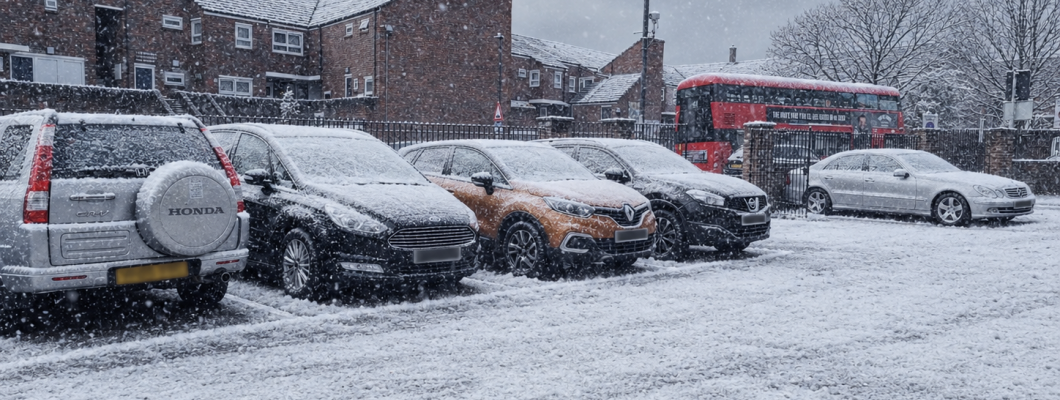
This is where the forecast meets your car park. A wet, stormy start to winter leaves surfaces saturated, with standing water, runoff across ramps and slopes, and wet leaves on paths. If a cold clear night follows, that moisture can freeze quickly into a thin, hard-to-see layer of ice.
That’s black ice, and it’s one of the most dangerous winter hazards because it often looks like ordinary wet tarmac. Repeated freeze-thaw cycles make it worse. Meltwater tracks across entrances and refreezes overnight, and shaded areas stay frozen long after the rest of the site has thawed.
(This is our own reading of how wet and cold conditions interact, not a Met Office forecast.)
The Risks for Pedestrians
Slips and falls on ice cause fractures, head injuries, sprains and back strain, and recovery can take weeks. Older people, children, anyone with mobility issues and anyone carrying bags are most at risk. The highest-risk spots on most sites are:
- Car parks, drop-off zones and shaded bays
- Entrances, exits and ramps
- Steps and sloping paths
- Loading bays and delivery areas
- School grounds, care homes and workplace walkways
Quick tips for people on foot: wear footwear with deep treads, take short shuffling steps, keep your hands free, stick to gritted and well-lit routes, and allow extra time. Rushing causes a large share of winter falls.
The Risks for Drivers
Ice and storms make a difficult combination on the road. The Highway Code warns that stopping distances in icy conditions can be up to ten times longer than on dry roads. Add heavy rain, surface water, strong winds and dark mornings, and the margin for error shrinks.
- Clear every window, mirror and light before setting off, and the roof too
- Slow down and leave a much bigger gap to the vehicle in front
- Brake gently and early, and avoid sudden steering
- Take extra care on bridges, exposed roads and shaded stretches, which freeze first
- Check tyre tread and pressure before the weather turns
- Keep an emergency kit in the car and travel only if you need to in severe conditions
Why Preparation Can’t Wait Until the First Frost
Government and utility advice this winter has encouraged households to prepare for severe weather. The UK government and British Gas have recommended emergency supplies and preparations, though these are precautionary and don’t mean a particular freeze will occur. The same logic applies to anyone responsible for premises: put your plan in place now, while the weather is still kind. beinsure
If you manage a car park, school, care home, retail site, workplace or housing development, you have a duty of care to the people using your space. Gritting is essential, but ice can form overnight, and nobody can be on site at every hour of every cold night. A forecast of an unpredictable winter makes automatic warnings more valuable, not less.
(This is general information rather than legal advice. Check your own obligations under health and safety and occupiers’ liability requirements.)
An Automatic Warning That Works Around the Clock
The Ice Guardian range of flashing ice warning signs from Parking Shop Direct warns pedestrians and drivers of ice risk without anyone having to remember to put a sign out. Key features include:
- 6 super-bright flashing LEDs that trigger automatically when the temperature falls below 3 degrees
- Battery powered with no external power needed, so there’s no wiring and no running costs
- No moving parts, so maintenance is minimal
- Batteries that typically last 2-3 years in normal use, using 6 industrial-grade AA cells with a weather-sealed cover and simple swap-over
- Easy wall or post mounting, with the correct fittings supplied
Three Sizes to Suit Your Site
- Ice Warrior, 350 x 500mm is a compact, versatile option for entrances and tighter spaces. £357 inc VAT.
- Ice Hawk, 450 x 590mm is a larger plate that’s highly visible in busier areas. £397 inc VAT.
- Ice Sentinel, 565 x 485mm is a landscape-format sign for wider layouts. £397 inc VAT.
(Prices correct at time of writing. Check the product pages for current pricing and availability.)
Your Pre-Winter Checklist
A sign works best as part of a wider plan. Before the cold arrives:
- Stock up on grit and salt and position grit bins where they’ll be needed
- Install automatic ice warnings at car park entrances, ramps and high-footfall paths
- Add anti-slip safety surfaces to steps, ramps and slippery walkways
- Put entrance matting in place to cut down wet floors indoors
- Improve lighting with solar LED lights for dark mornings and evenings
- Review your winter essentials and keep an accident reporting book to hand
- Schedule and record inspections during cold spells
- Check the forecast regularly, including the Met Office’s next outlook at the end of November
Frequently Asked Questions
What is a super El Niño?
It’s an informal term for an exceptionally strong El Niño, a warming of Pacific Ocean surface waters that shifts weather patterns around the world. It isn’t an official Met Office category.
Does a super El Niño mean a snowy UK winter?
Not necessarily. The Met Office says El Niño raises the chances of a wetter, stormier autumn and early winter, and can be linked to colder, calmer spells later, but it does not determine individual weather events.
Why is black ice so dangerous?
It’s a thin, transparent layer of ice that looks like wet tarmac or paving, so pedestrians and drivers often don’t see it until they’ve already lost grip.
At what temperature do the Ice Guardian signs activate?
The flashing LEDs trigger when the temperature falls below 3 degrees.
Do ice warning signs need mains power?
No. They run on batteries, with a typical life of 2-3 years.
Final Thoughts: Prepare for the Winter You Can’t Predict
A record-breaking El Niño makes for dramatic headlines, but the practical message is simple. Winter 2026-27 looks set to be unsettled, with a stormy, wet start and a genuine chance of cold snaps to follow. You can’t control the weather, but you can control how ready your site is for it.
Don’t wait for the first icy morning. Browse the full range of flashing ice warning signs and give pedestrians and drivers a clear warning before ice becomes an accident.
Leave a Comment